STAGE · OTT PLATFORM2024

Turning static into
intent.

Redesigning STAGE's homepage poster from a passive visual into an interactive preview experience that drives content discovery.
ROLE
Product Designer
TEAM
2 PM · 1 Eng · Me
TIMELINE
1d design · 7d test
IMPACT
+19.6% preview→content
BEFORE / AFTER · ONE FRAME, TWO STATES
STATIC ─────→ MOTION
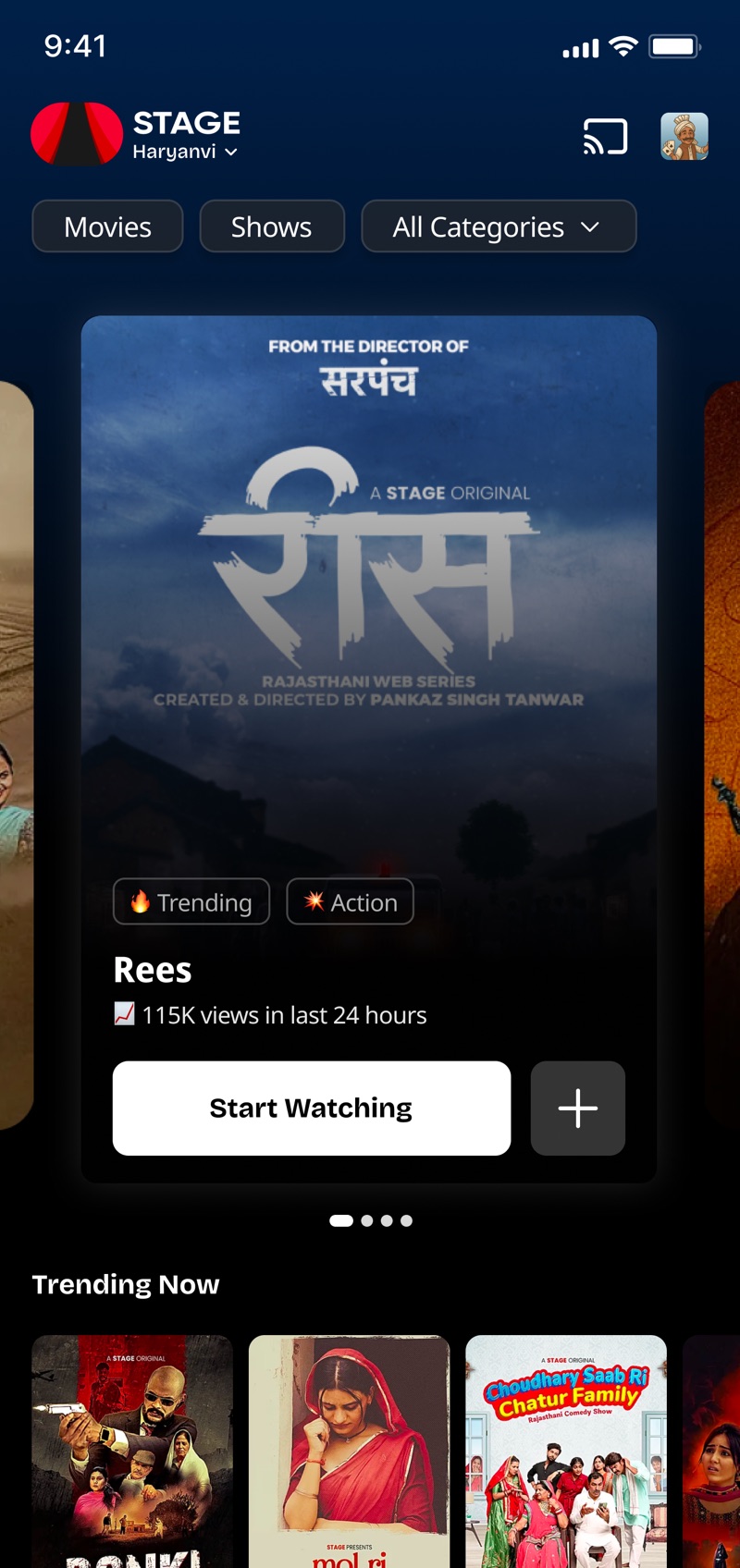
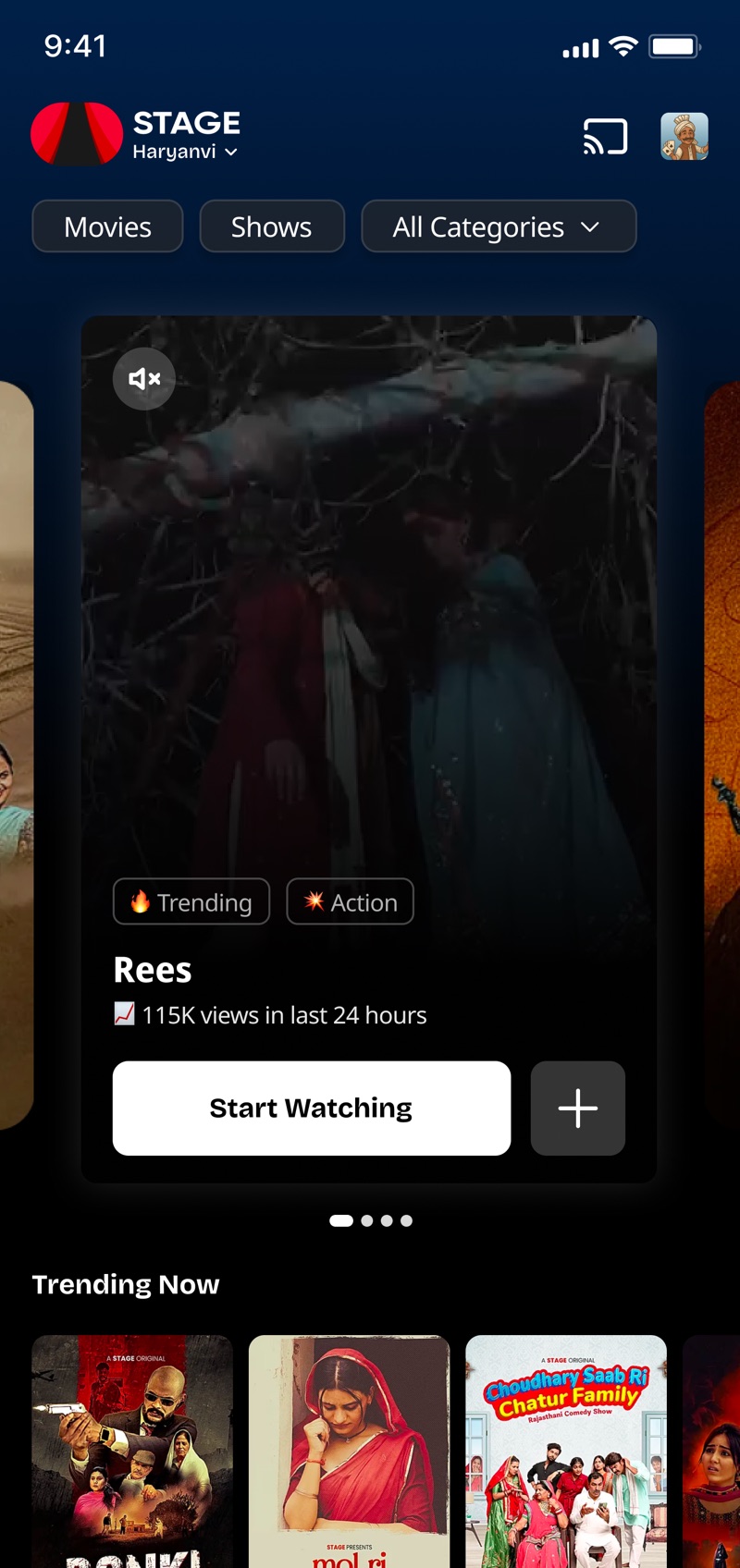
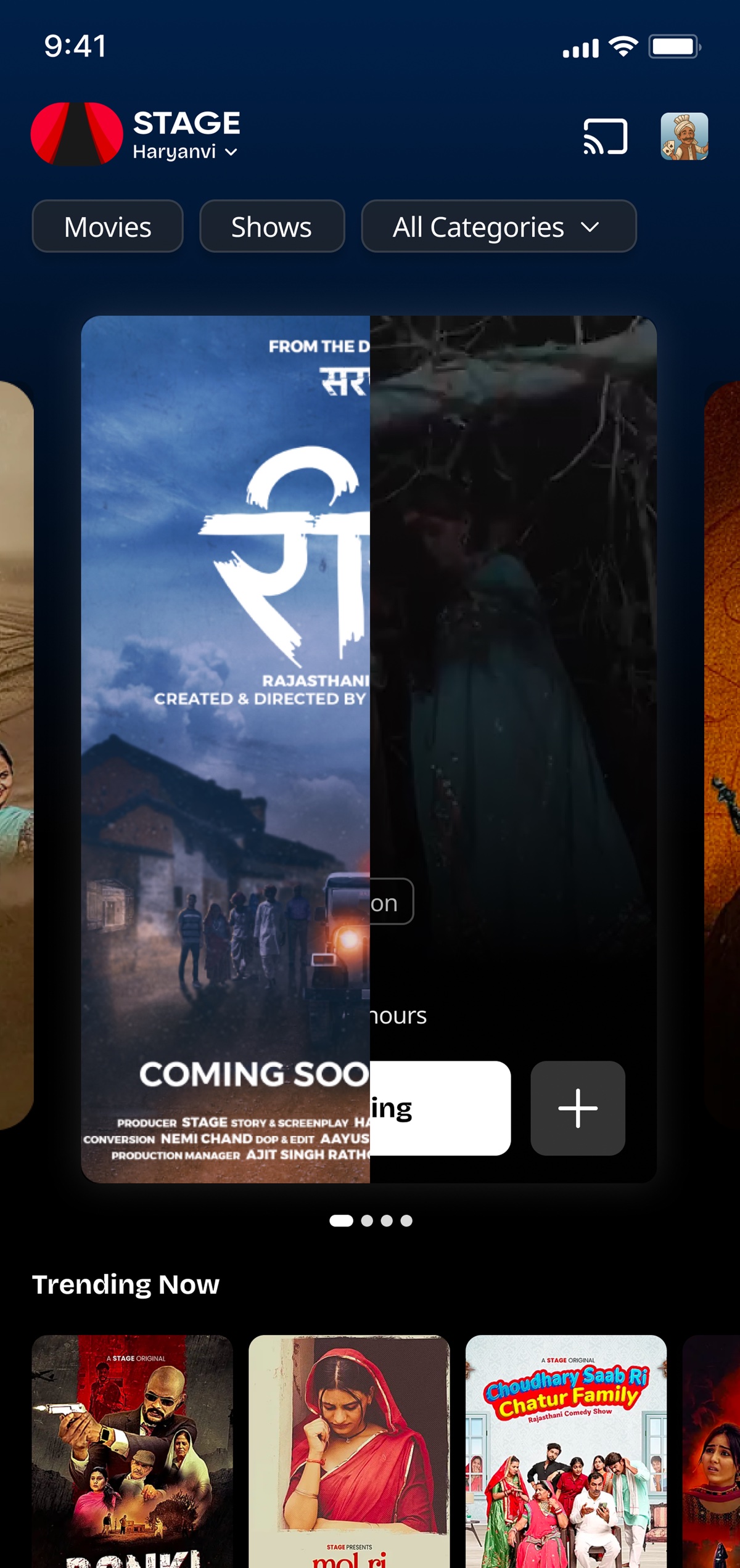
STAGE app, static poster morphing into motion preview
LEFT · STATE 012:3
Static poster
Wallpaper. Familiar. Earns the first glance, then asks the user to commit blind.
RIGHT · STATE 021:1
Motion preview
The decision cost drops to near zero, a 2-3s clip answers "is this for me?"
ONE SLOT · ONE MORPH · ZERO ADDED TAPS
THE PROBLEM

The 19.6% problem

STAGE's homepage poster looked good but wasn't doing its job. Only a fraction of users who saw it actually tapped through to content. The data told a clear story: the poster was wallpaper, not a doorway.

Three things were broken. None of them flashy on their own, together, they explained the leak.
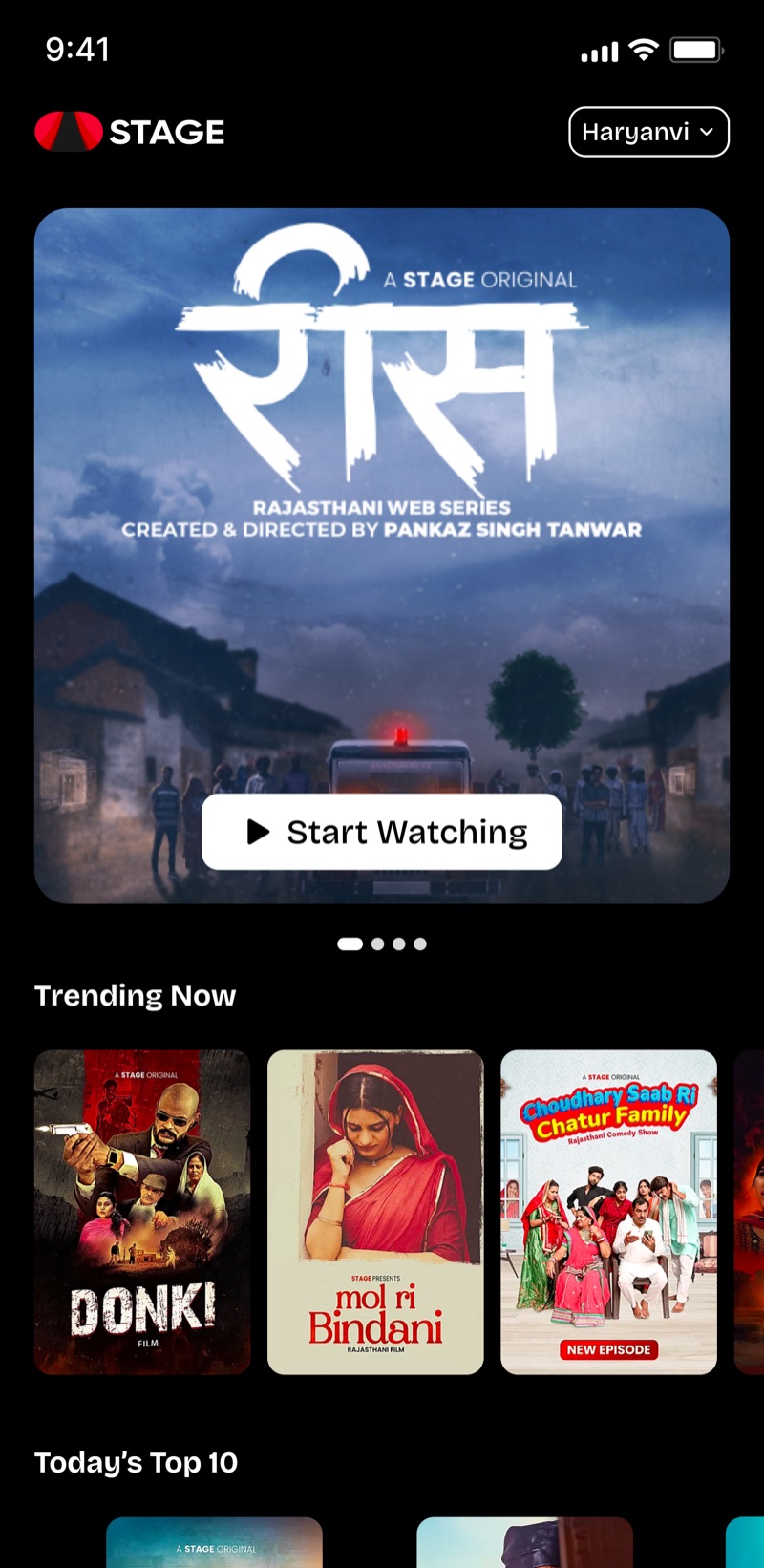
DIAGNOSTIC · OLD HOMEPAGE3 BREAKS · 1 CONSEQUENCE
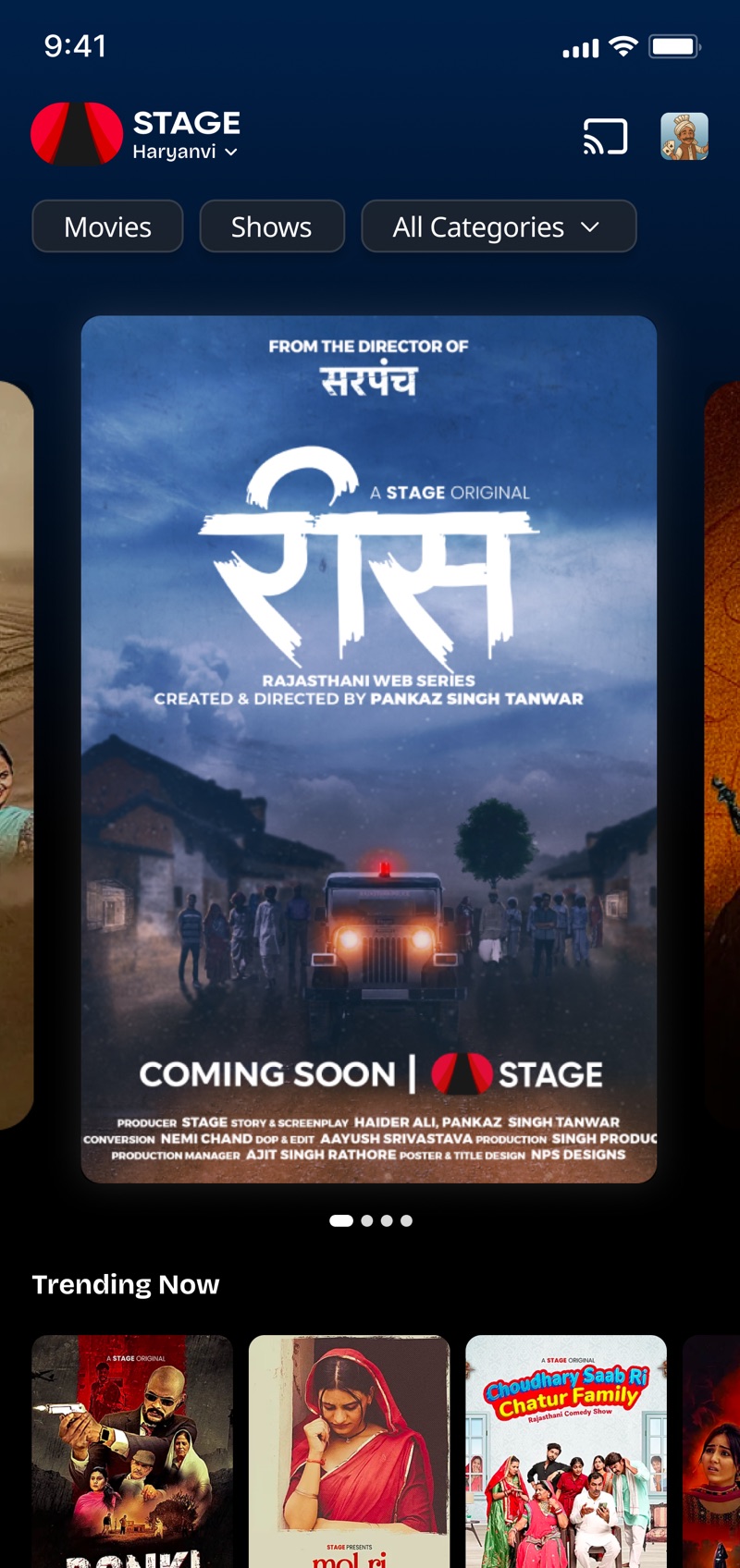
STAGE old homepage, static poster with no preview layer
A
Generic poster
Same frame for everyone. No personalization signal, taste, history, language all ignored.
BREAK 01
B
Cluttered hierarchy
Poster fights with surrounding chrome. Nothing dominates; the eye has nowhere to land.
BREAK 02
C
Dead-end CTA
Tap and commit. No way to preview the content first, decisions made blind.
BREAK 03
HOMEPAGE PIXELS~38%
CONSUMPTION STARTS19.6%
GAP (PIXELS − STARTS)−18.4 pts
Where users dropped off
01 · Saw platter
98%
02 · Tapped poster
78.4 pts
19.6%
03 · Reached content
8.2 pts
11.4%
↳ ~78% OF VIEWERS NEVER TAPPED THE HERO SLOT
ISSUE · A
No personalization
Every user saw the same static frame regardless of taste or history.
ISSUE · B
Poor hierarchy
The poster competed with surrounding UI instead of commanding attention. The eye had nowhere to land.
ISSUE · C
Dead-end experience
No preview layer. Users had to commit to a full page before knowing if content was worth their time.
THE BENCHMARK

What everyone else missed

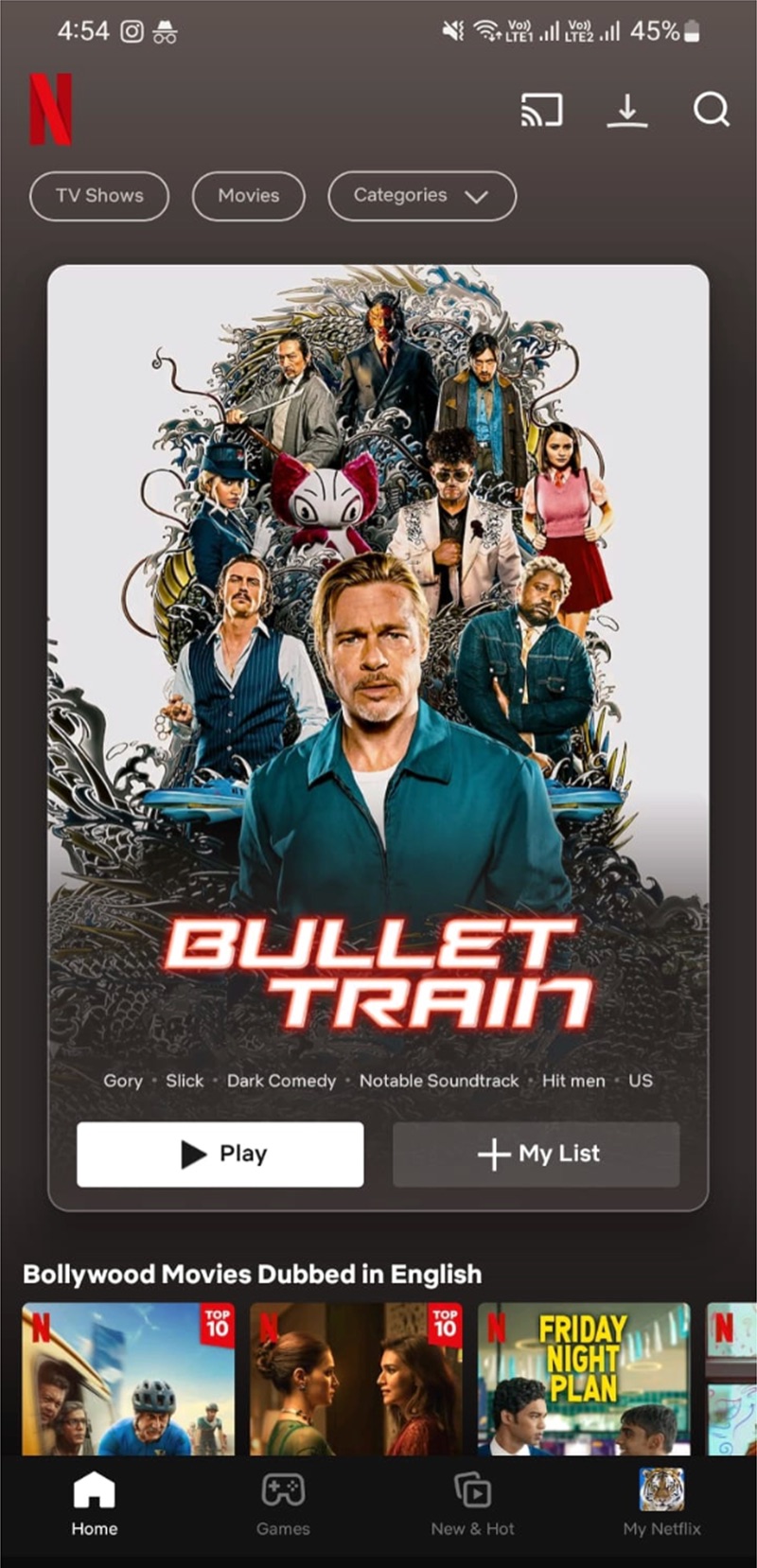
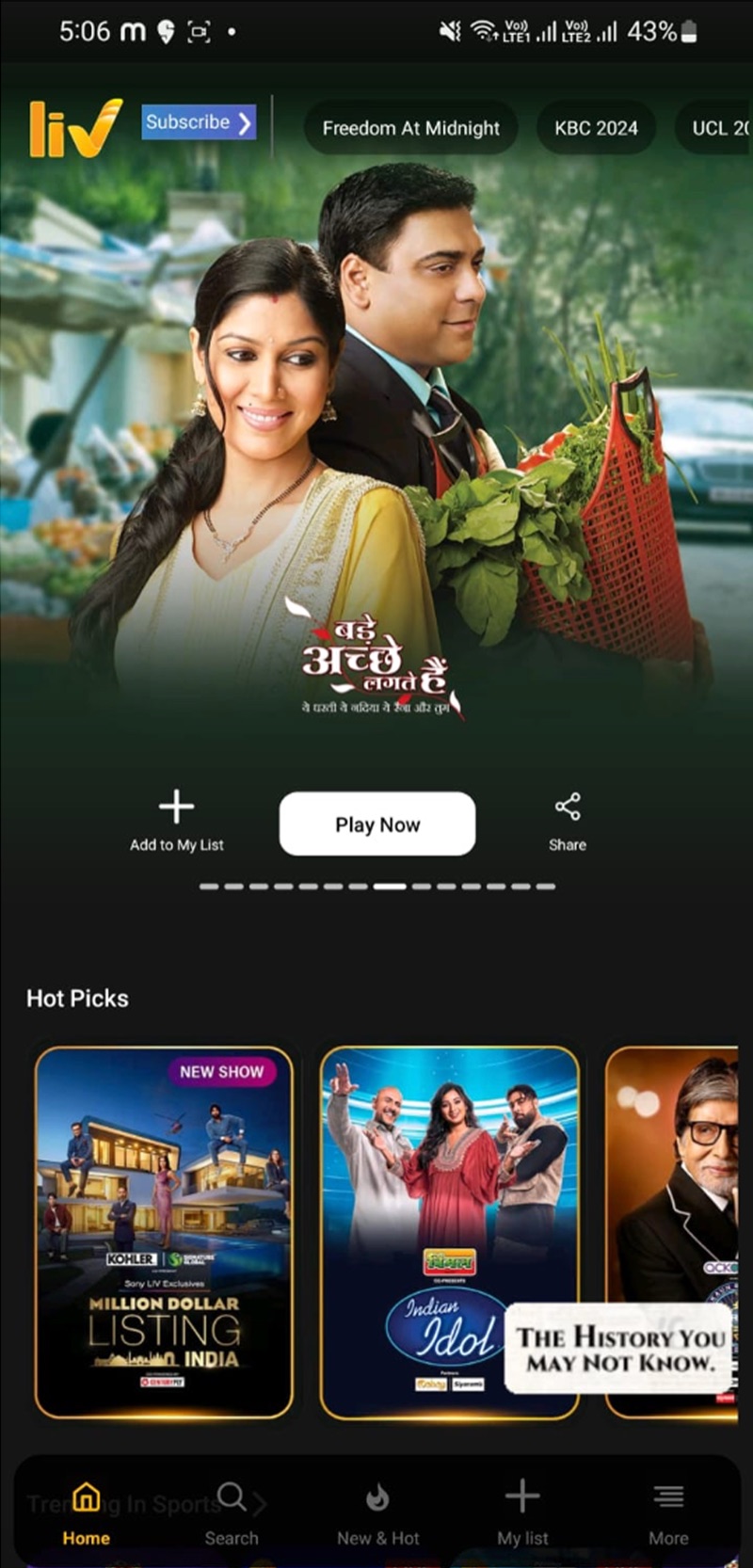
I audited four major streaming and content platforms. Every single one treated homepage posters the same way, big image, text overlay, CTA button. The pattern was so universal that nobody was questioning whether it worked.

The gap wasn't visual quality. It was interaction cost. Users were being asked to make a decision with almost no information. The poster gave them a mood, not a reason.
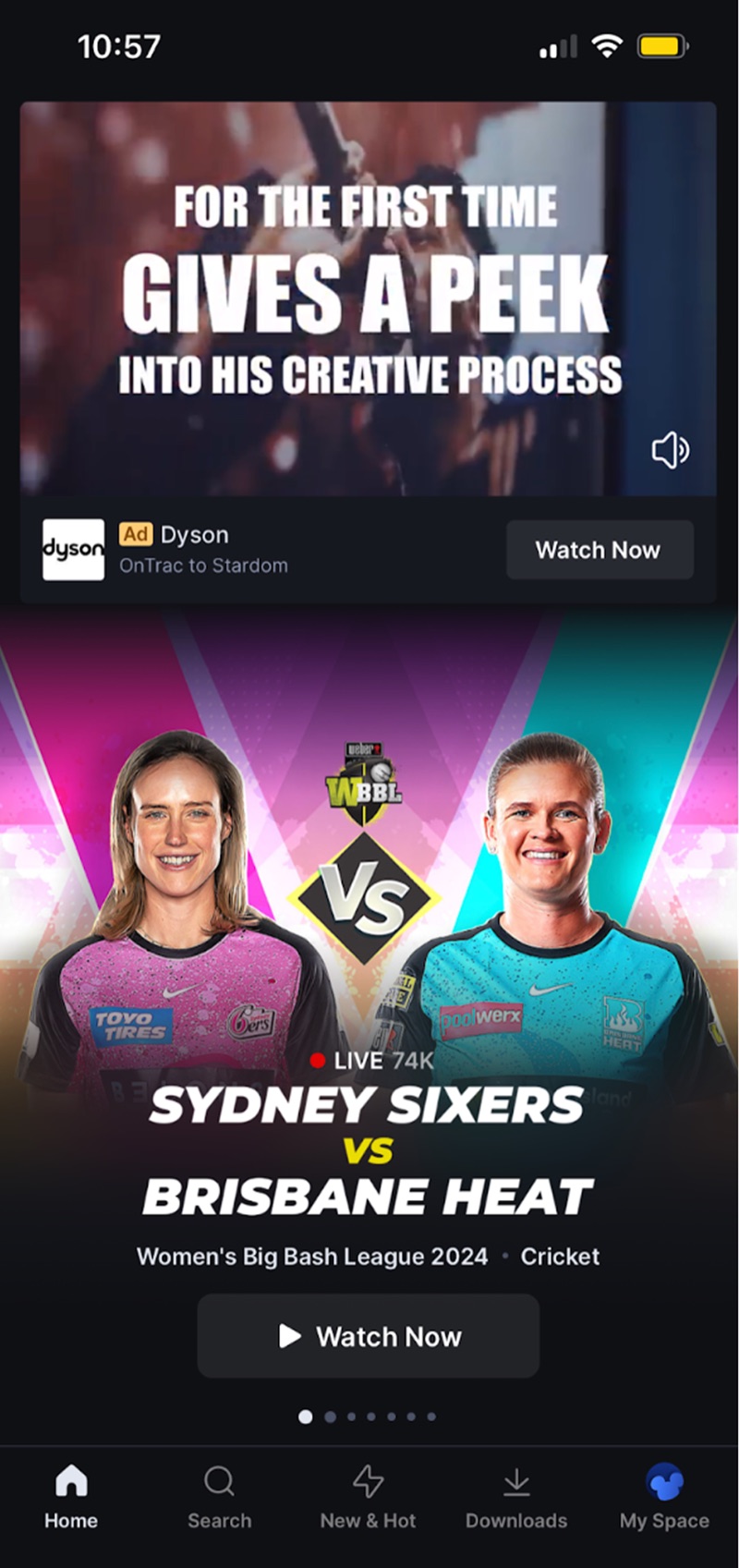
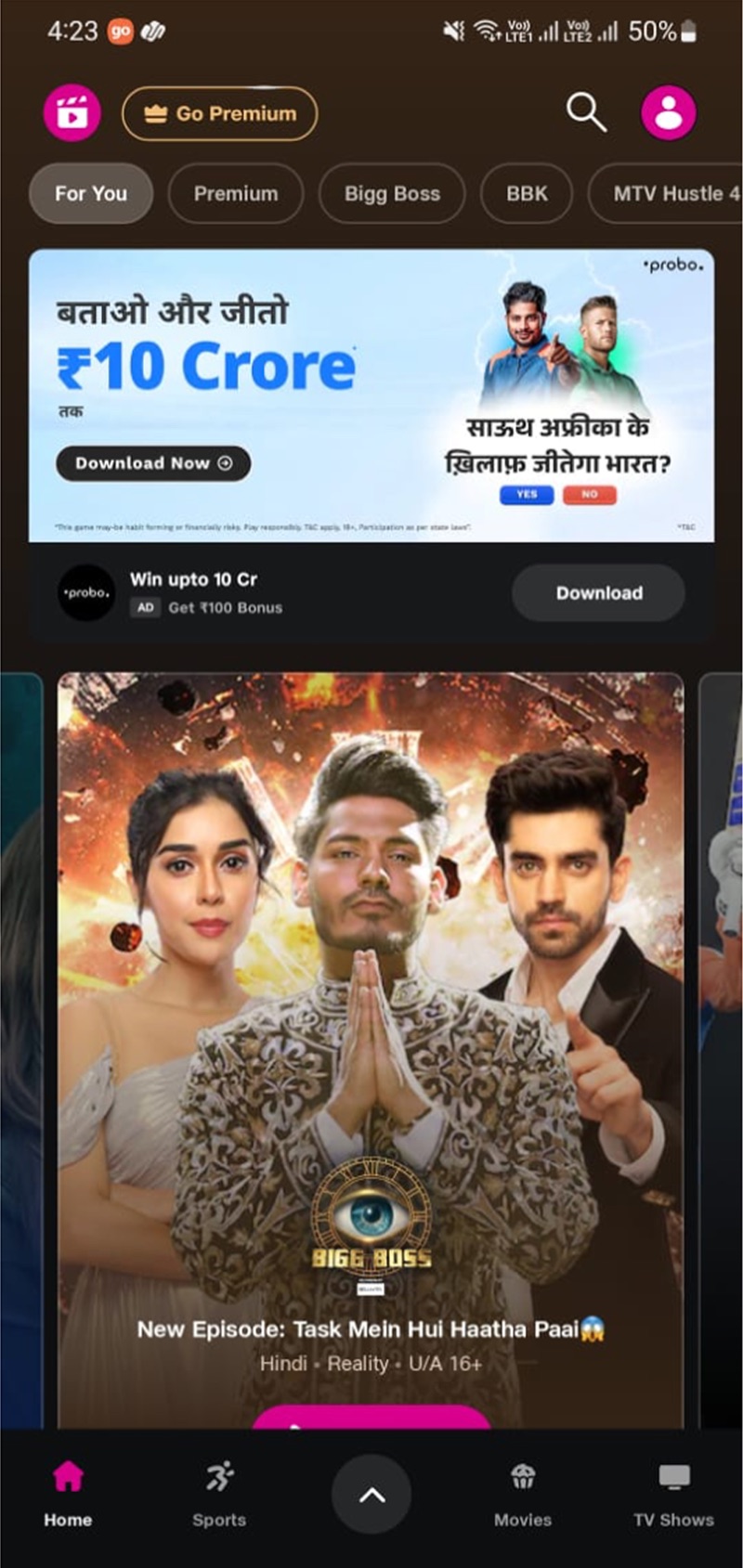
COMPETITOR AUDIT · TOP-OF-HOMEPAGE TREATMENT
01 · Hotstar
Hotstar homepage, static poster treatment
02 · JioCinema
JioCinema homepage, static poster treatment
03 · Netflix
Netflix homepage, static poster treatment
04 · SonyLIV
SonyLIV homepage, static poster treatment
THE HYPOTHESIS

What if the poster wasn't a poster, but a preview?

Instead of a static frame, I explored turning the platter into a short, motion-driven preview, giving users a taste of the content before they committed. The goal was to reduce the decision cost to near zero.

Research on the Mere Exposure Effect suggests that even brief, passive exposure increases familiarity and preference. A 2-3 second motion preview could do two things at once: inform the decision and build subconscious interest.

STATIC
Poster · 0s
MOTION
Preview · 2-3s
INTENT
Tap · commit
MERE EXPOSURE EFFECT
0sEXPOSUREPREFERENCE ↑
Brief, passive exposure builds familiarity → familiarity builds preference.
↳ THE BET
Static → Motion → Intent.
Lower the decision cost. Let the content sell itself in 2-3 seconds.
↳ THE CONSTRAINT
Feel native, not like an ad.
If the motion felt like an interruption, it would backfire on trust.
THE CONSTRAINTS

Designing around real constraints

This wasn't a blank canvas. The homepage has rules, and the poster has to survive them all.

Aspect ratio
The poster lives in a fixed container. Motion content had to fit without letterboxing or crops.
✕ DON'TLETTERBOX
BLACK BARS
✓ DOCLEAN FIT
FILLS FRAME
Face cropping
Most poster art is face-heavy. A frame cutting an actor at the forehead kills the emotional hook.
✕ DON'TCROPPED
FOREHEAD CUT
✓ DOFRAMED
CTA collision
Buttons, titles, and metadata sit on top of the poster. Motion underneath can't fight with them.
✕ DON'TOVERLAP
TITLEWatchBUTTON ON TITLE
✓ DOSEPARATED
TITLEWatch
Browsing speed
Users scroll fast. A preview has to register in 1-2s or it's wasted effort. Long animations are a liability.
✕ DON'T6s · TOO LONG
0s1s2s3s4s5s6s6s · USERS GONE
✓ DO2s · LANDS
0s1s2s3s4s5s6s2s · LANDS
THE SOLUTION

A two-ratio system

I designed a system that adapts the poster into two states, a static ratio for the default view and a motion ratio for the preview, and transitions between them seamlessly.

The static state works exactly like the current poster: clean, art-directed, optimized for the hero slot. The motion state activates on pause, expanding the aspect ratio to accommodate a video preview without disrupting layout.
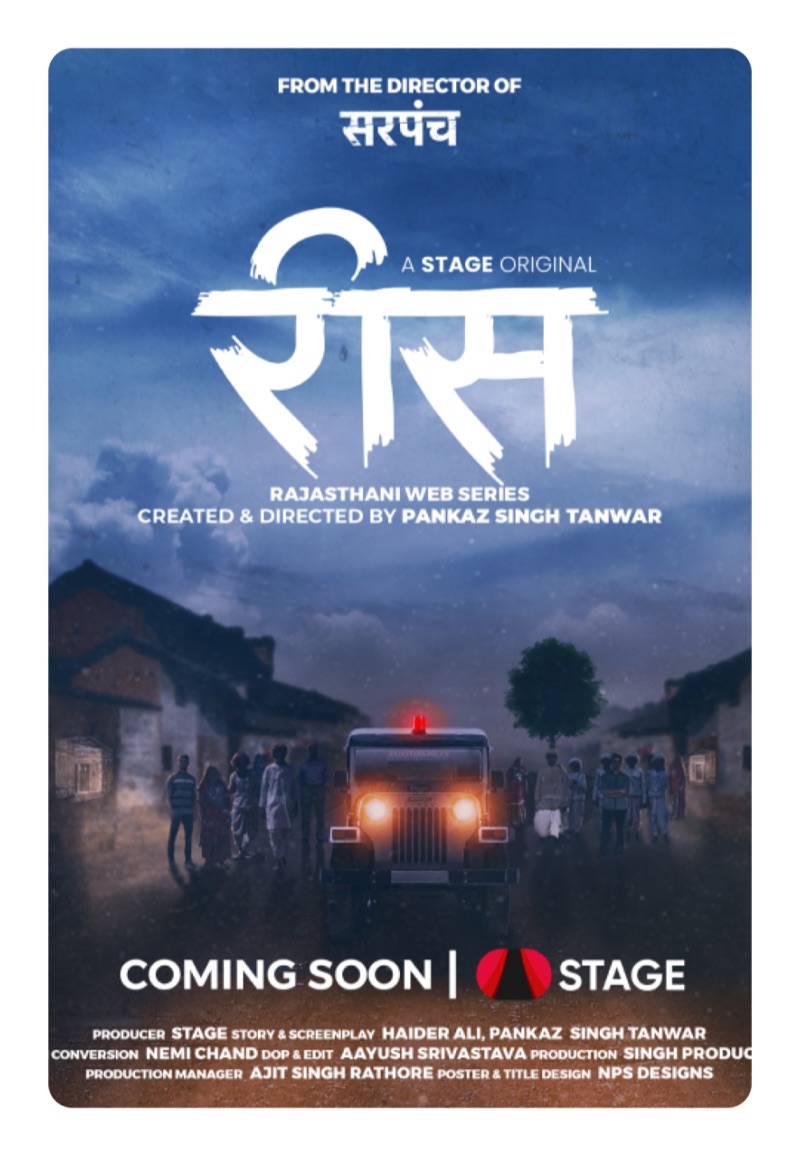
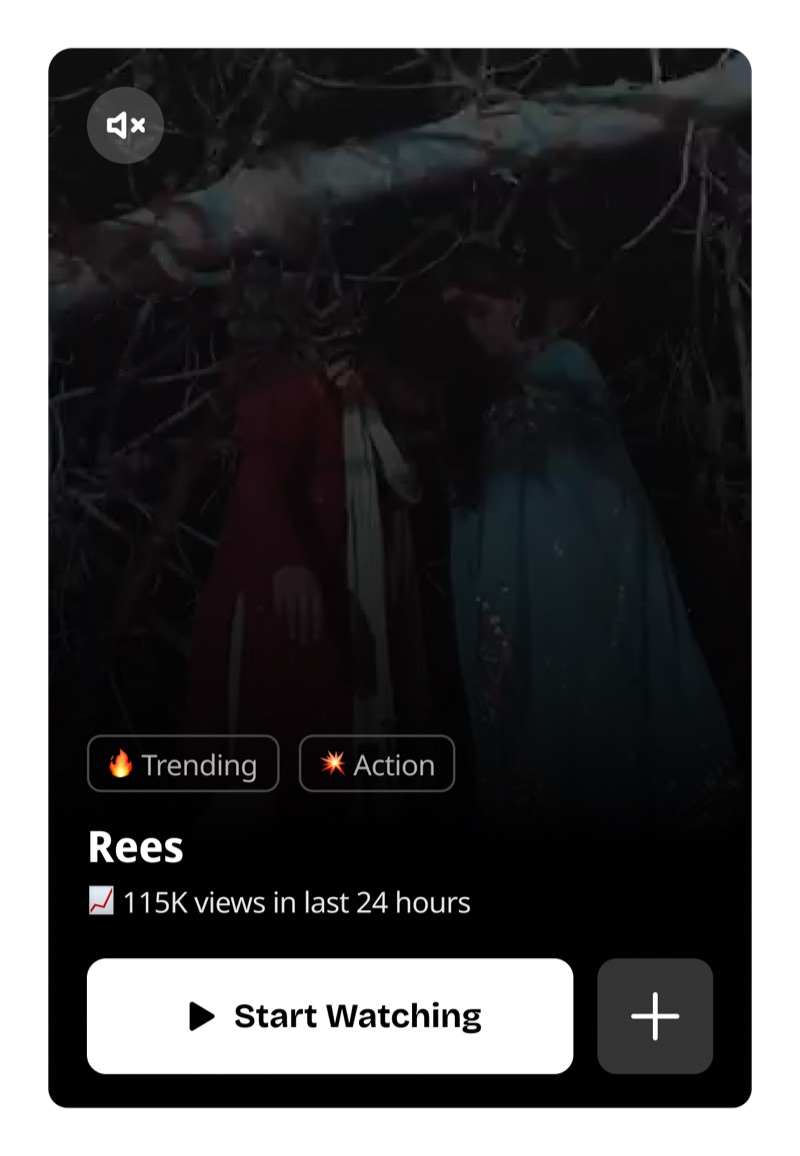
STATE 01 · STATIC, DEFAULT · POSTER
STATE 01 · STATIC
DEFAULT · POSTER
2 : 3
ON DWELL≈ 2.5s
STATE 02 · MOTION, ACTIVE · PREVIEW
STATE 02 · MOTION
ACTIVE · PREVIEW
1 : 1
WHY THIS WORKS

Three frames of an interaction

The principles guiding the design, read as a storyboard rather than a list.
FRAME · 01SCROLLING
STAGE platter, scrolling state
Poster earns attention first
The static frame still does the heavy lifting for first impressions. Motion is additive, not a replacement.
FRAME · 02PAUSE
STAGE platter, pause state
Movement becomes the preview
A 2-3s clip answers "is this for me?" passively. The content comes to the user, not the other way around.
FRAME · 03TAP
STAGE platter, tap state
Reward, not interruption
Motion only triggers when behavior suggests interest. It respects the browsing flow instead of hijacking it.
RESULTS

The directional signal

I tested the redesigned poster against the original across a 7-day A/B test on the STAGE platform.

PREVIEW ENGAGEMENT
0%
BEFORE12%
AFTER32%
More users interacted with the poster rather than scrolling past it.
PREVIEW → TAP
0%
BEFORE22%
AFTER60%
Of users who saw the motion preview tapped into content, vs a much lower static rate.
BOUNCE REDUCTION
0%
BEFORE38%
AFTER23%
Users stayed on the homepage longer and explored more before leaving.
↳ 7-DAY A/B TEST · ~12K USERS · STAGE PLATFORM
HONEST · NOTE
These are early numbers from a single test cycle. The sample is meaningful but not conclusive, I'd want to run this across content categories and geographies before calling it proven. But the directional signal is strong: reducing decision cost works.
END · OF · CASE
Thanks for reading.
PRERNA · 2024← PREV · STAGE · DISCOVERY